Four Monuments were Dedicated to Manitowoc Civic Leaders by the Knights of Pythias in 1926
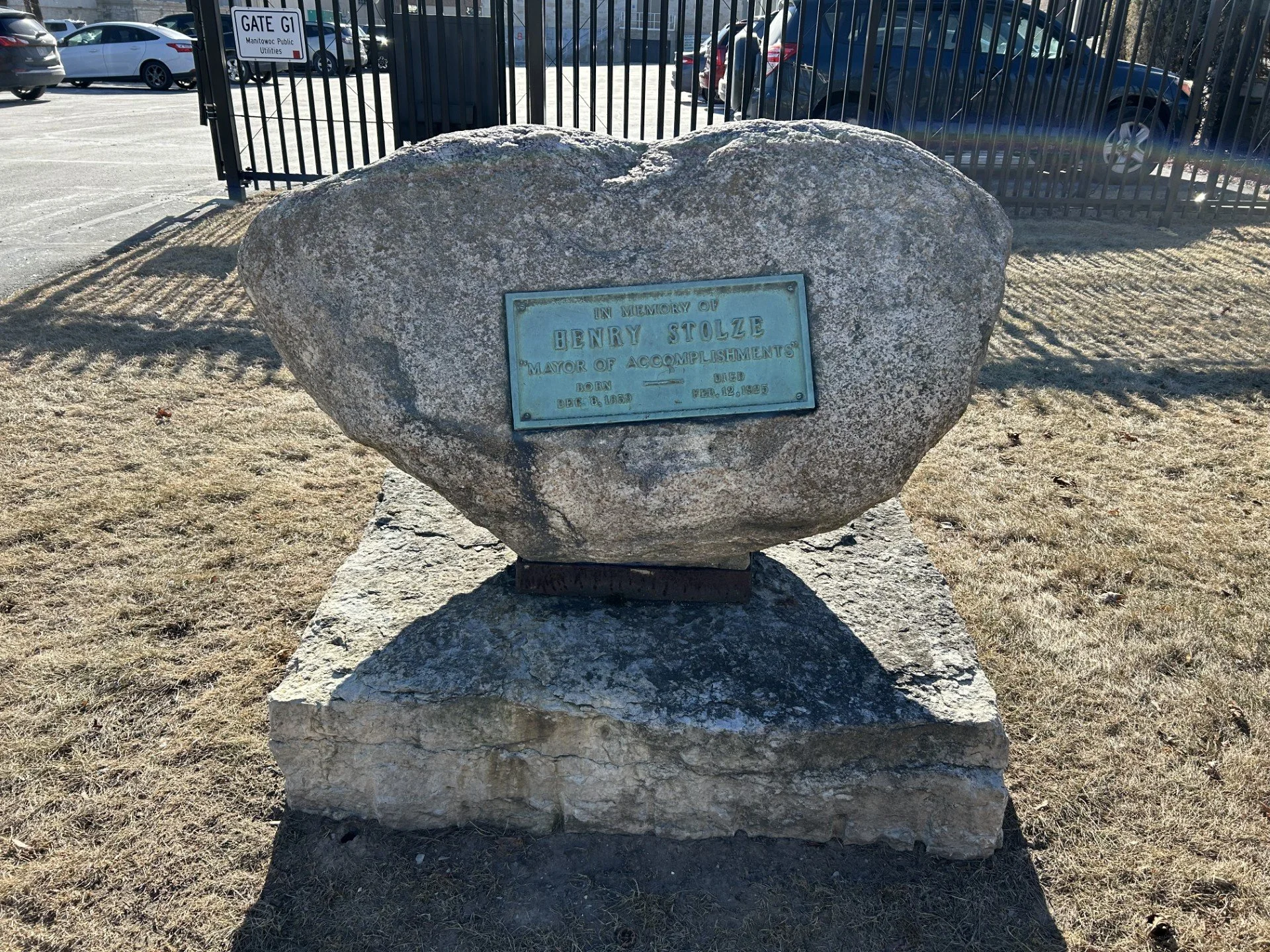
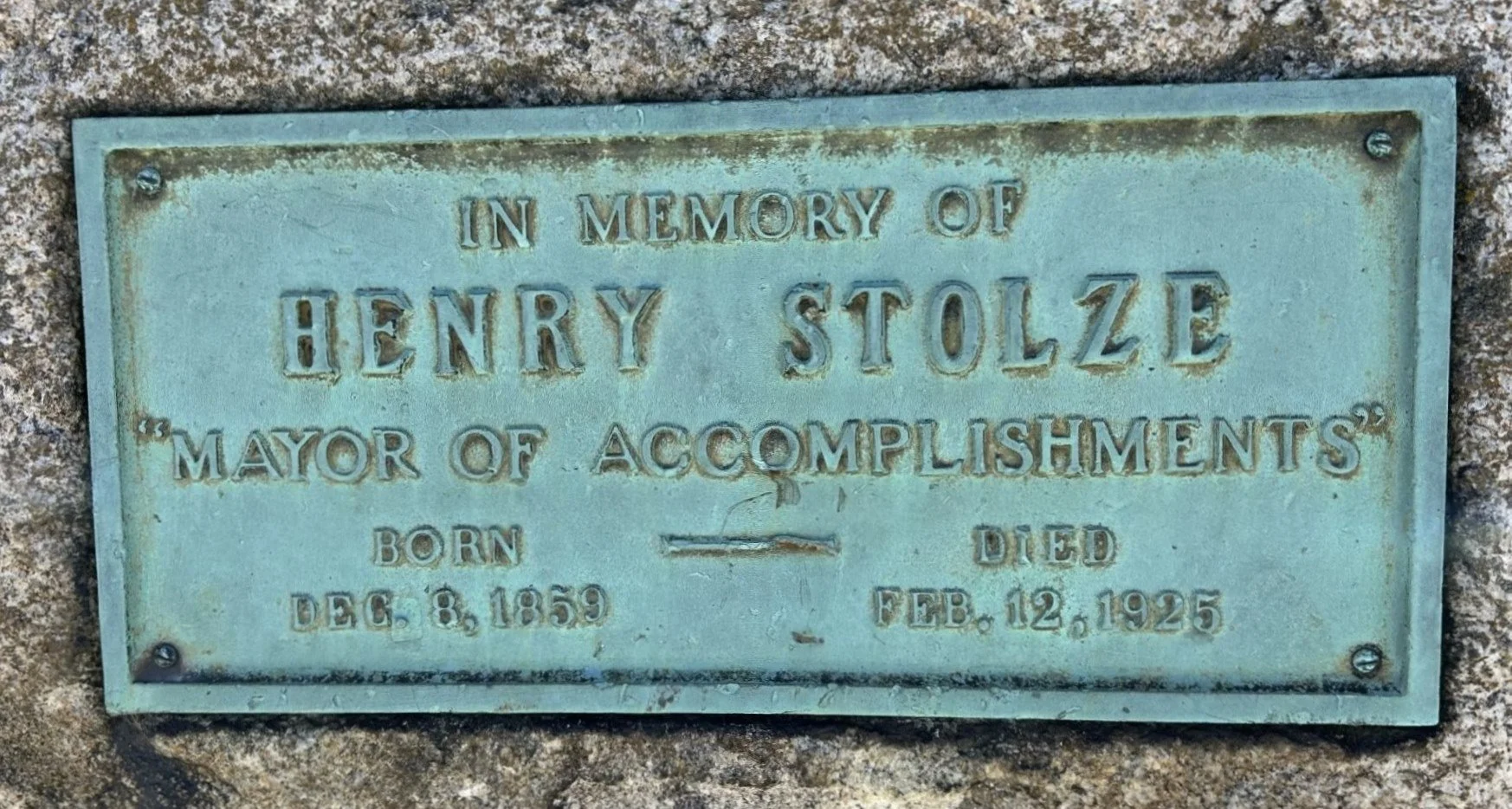
The Henry Stolze monument and bronze tablet are located on the Manitowoc Public Utilities grounds on Madison Street.
On the cold afternoon of Saturday, December 11, 1926 (a century ago this coming December), four monuments were dedicated to former Manitowoc civic leaders by Manitowoc Lodge No. 86, Knights of Pythias. Bronze tablets on large rugged gray granite boulders on flat stone bases recognized the contributions to Manitowoc’s development and progress by Henry Stolze, William Rahr, Kiler K. Jones and John Schuette.
The first monument was dedicated in memory of Henry Stolze (1859-1925) at the city utilities plant, S. Seventh and Columbus Streets. Stolze was born in Germany and came to Manitowoc with his parents when he was nine years old. In 1888, he began the Stolze Manufacturing Co. (later known as National Tinsel). As Manitowoc’s 13th mayor, he advocated public ownership of municipal utilities. In 1911, through Council action, he was successful in getting the city to purchase the waterworks and the electric light plant a few years later (now Manitowoc Public Utilities). The monument is located just west of an employee parking lot driveway on Madison Street between Seventh and Eighth Streets.
The second Pythian monument honored William Rahr (1854-1919), brewery and malt owner, Manitowoc’s 11th mayor and board secretary of the Manitowoc Hospital for the Insane for many years. His monument was placed at the east end of Hamilton street, about one block from the Rahr home at 612 Marshall Street (no longer standing). In 1939, vandals removed the bronze tablet on the monument, but it was found nearby. The boulder remains at its original location on the east side of S. Lake Street, but the commemorative plaque is no longer present.
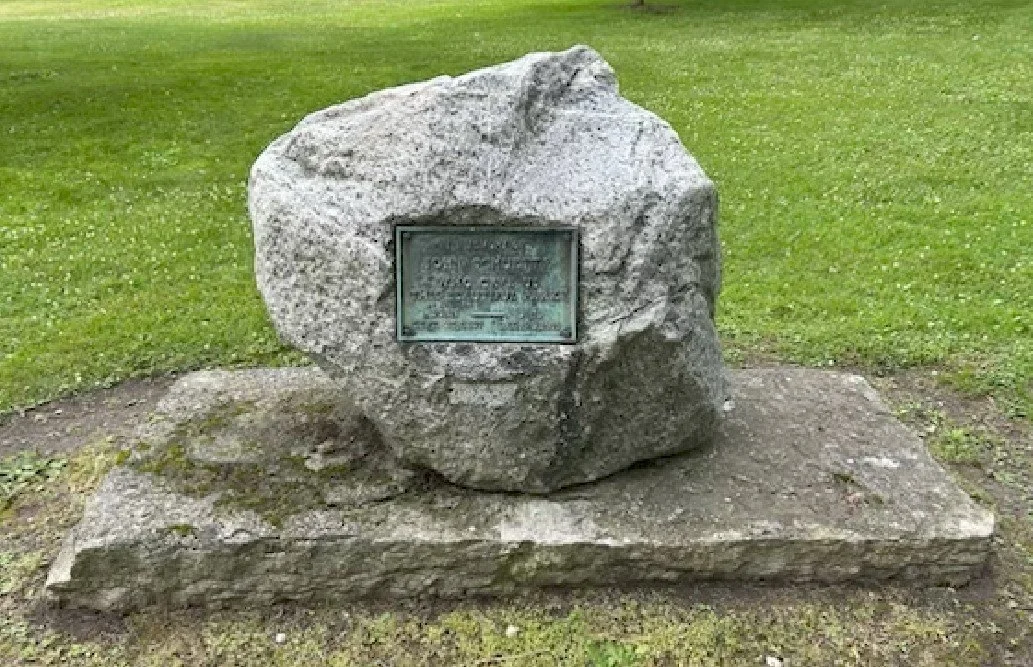
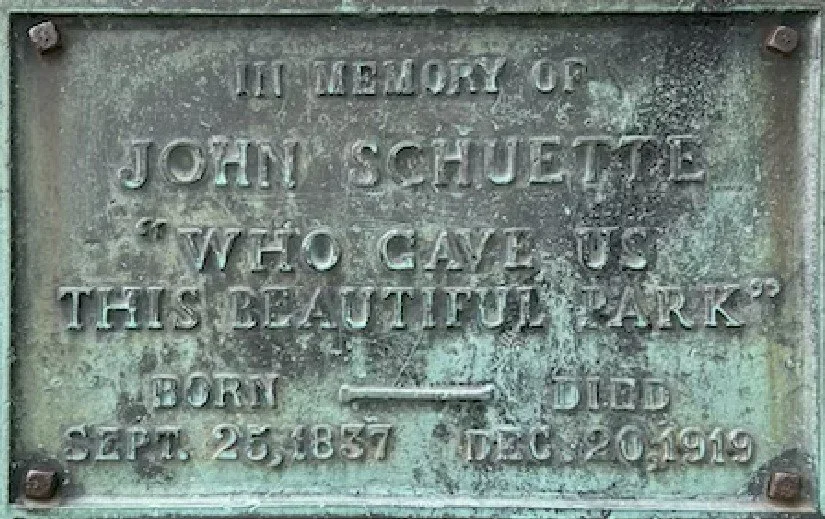
The John Schuette monument and bronze tablet are located in Riverside Park on Manitowoc’s north side.
The third monument was for Kiler K. Jones (1825-1886) who founded Manitowoc’s first public library. He launched the movement for a library in 1856, but it was not until 1868 that he donated the second floor of his store building for a reading room on York between Sixth and Seventh Streets. The Jones Library Association was organized to solicit memberships and run the library. Beginning in 1888, books were moved to other locations before a Carnegie Library was built on N. Eighth Street in 1902. The bronze tablet on the Kiler K. Jones stone marker was stolen in 1941 and never recovered.
The fourth monument was dedicated to John Schuette (1837-1919), merchant, banker, flour mill owner, electric light company organizer, harbor commissioner, Manitowoc’s 4th mayor and state senator. Born in Germany, he came with his parents and six brothers and sisters in 1849 to Manitowoc, where his father established a small general store. John and his brother Henry expanded it into one of Manitowoc’s leading department stores.
The John Schuette monument is located on a high bluff in Riverview Park on N. Water Street, adjacent to the former John and Rose Schuette residence (now Harrigan Parkside Funeral Home). Land for the city park was given by John Schuette in 1909.
The ceremonies began at 2:30 p.m. at the Stolze monument. Charles Frazier, a charter member of the local Pythian lodge, presided and unveiled each of the four stones, making appropriate remarks. The Lincoln high school band played and city attorney Harry F. Kelley addressed the crowd.
Speakers at the other monuments included Atty. Albert L. Hougen, who paid tribute to the life of William Rahr. Judge Emil Baensch talked about the early days of Manitowoc at the Jones memorial. Atty. Edwin G. Nash eulogized John Schuette at the marker in Riverview Park.
Following the programs, a banquet was held at Schreihart’s hall, 1002 Washington Street, where Supreme Chancellor of the Knights of Pythias R. S. Witte of Milwaukee addressed those gathered.
The accomplishments and contributions of these civic-minded Manitowoc residents remind us of the positive impact of public service in a community.